Written by Ashley Marshall, Forest School Educator
As the autumn air grows chilled and the leaves begin their steady descent, my EverWild Forest School class paused to look around and ask a simple question: where are all these leaves going? When leaves fall in large amounts into our local bodies of water, they don’t just disappear. They change the very world beneath the surface. This seasonal shift became the anchor for our latest deep dive into water ecology, where our students explored how a changing forest impacts the creatures living in the river.
The Chemistry of Autumn Water
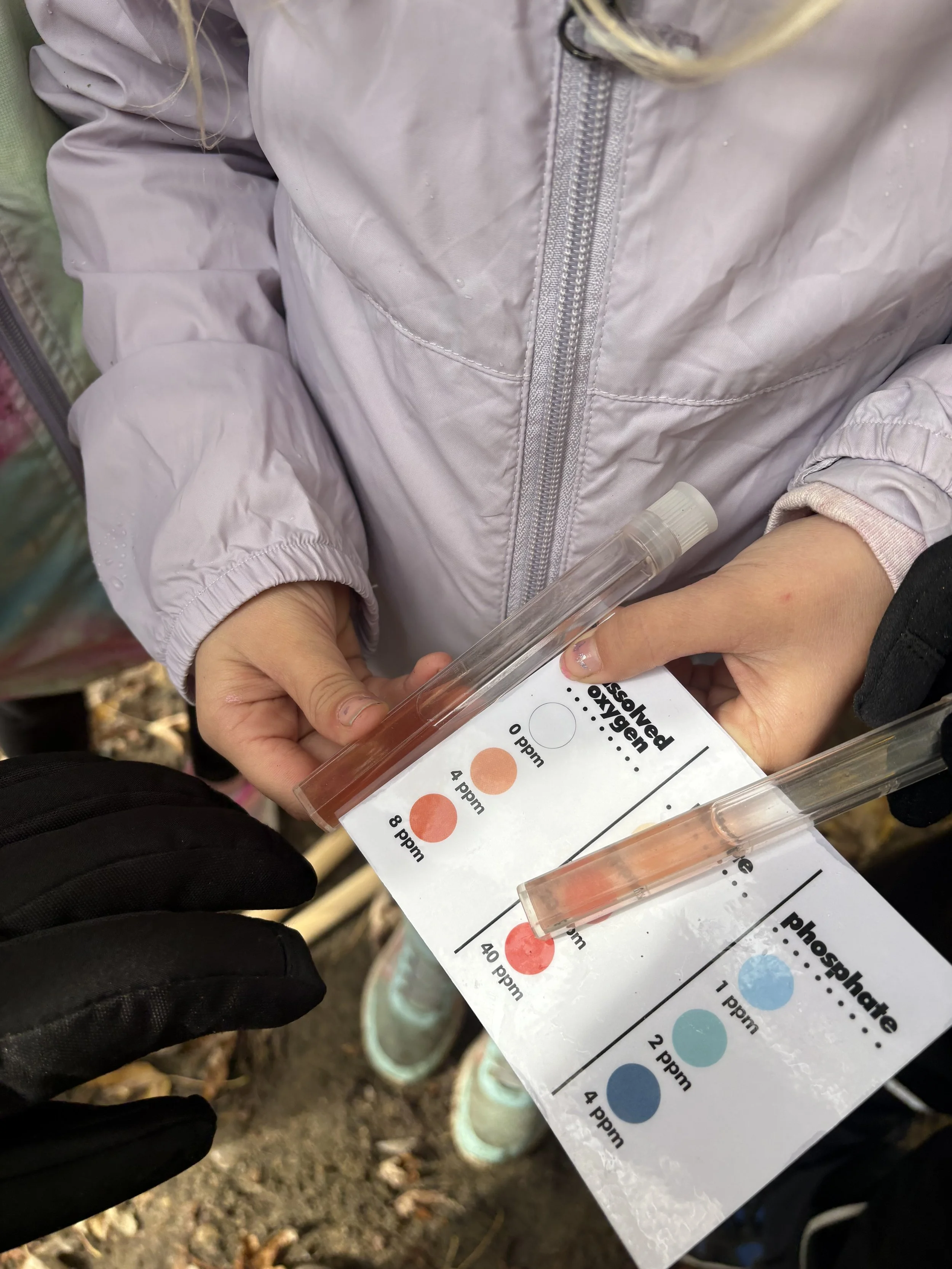
To understand how our waters change with the seasons, we had to look at what fish and macroinvertebrates need to thrive. Thanks to kits borrowed from the Boise Watershed, our students became real field scientists, testing the water of the Boise River for dissolved oxygen. We learned that just like us, aquatic life needs oxygen to breathe. However, as massive amounts of autumn leaf litter decompose in the river, that breakdown process actually reduces the levels of dissolved oxygen. The leaves also create a heavy layer of sediment. When the river undergoes its natural “spring mixing”, this sediment turns over, releasing nutrients that can cause problematic algae blooms later on.
Unlocking the River Bed: Critters as Health Indicators
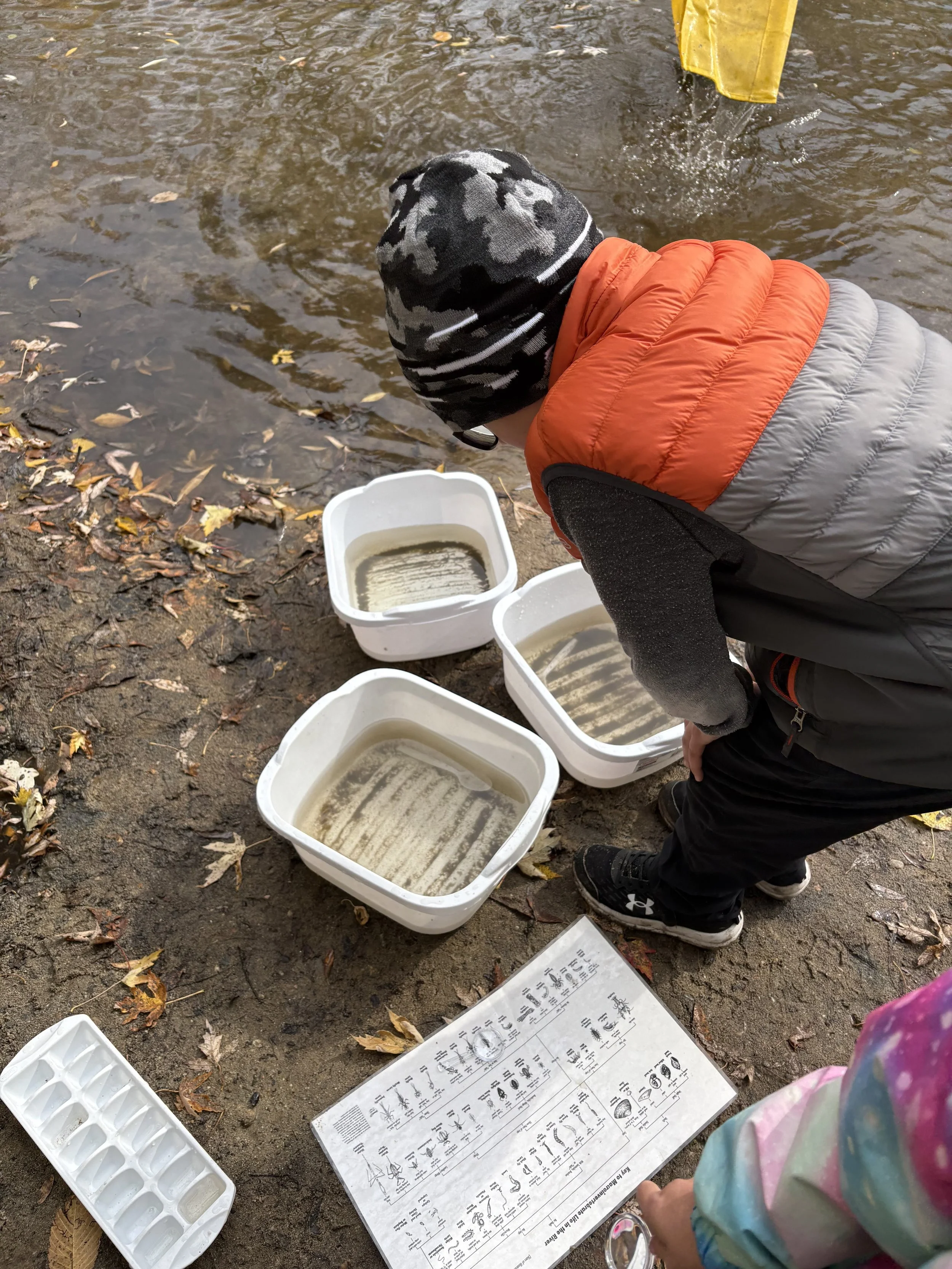
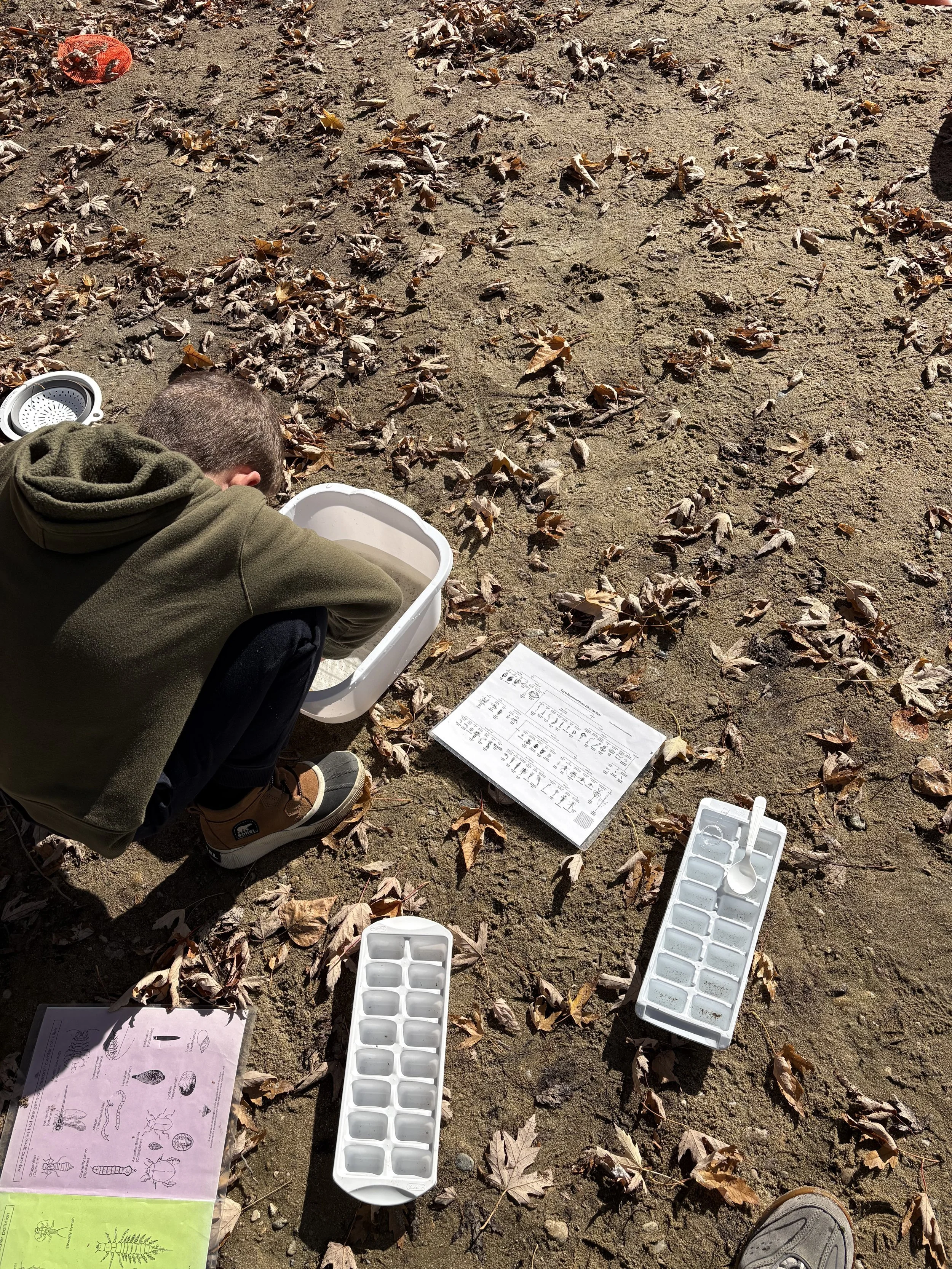
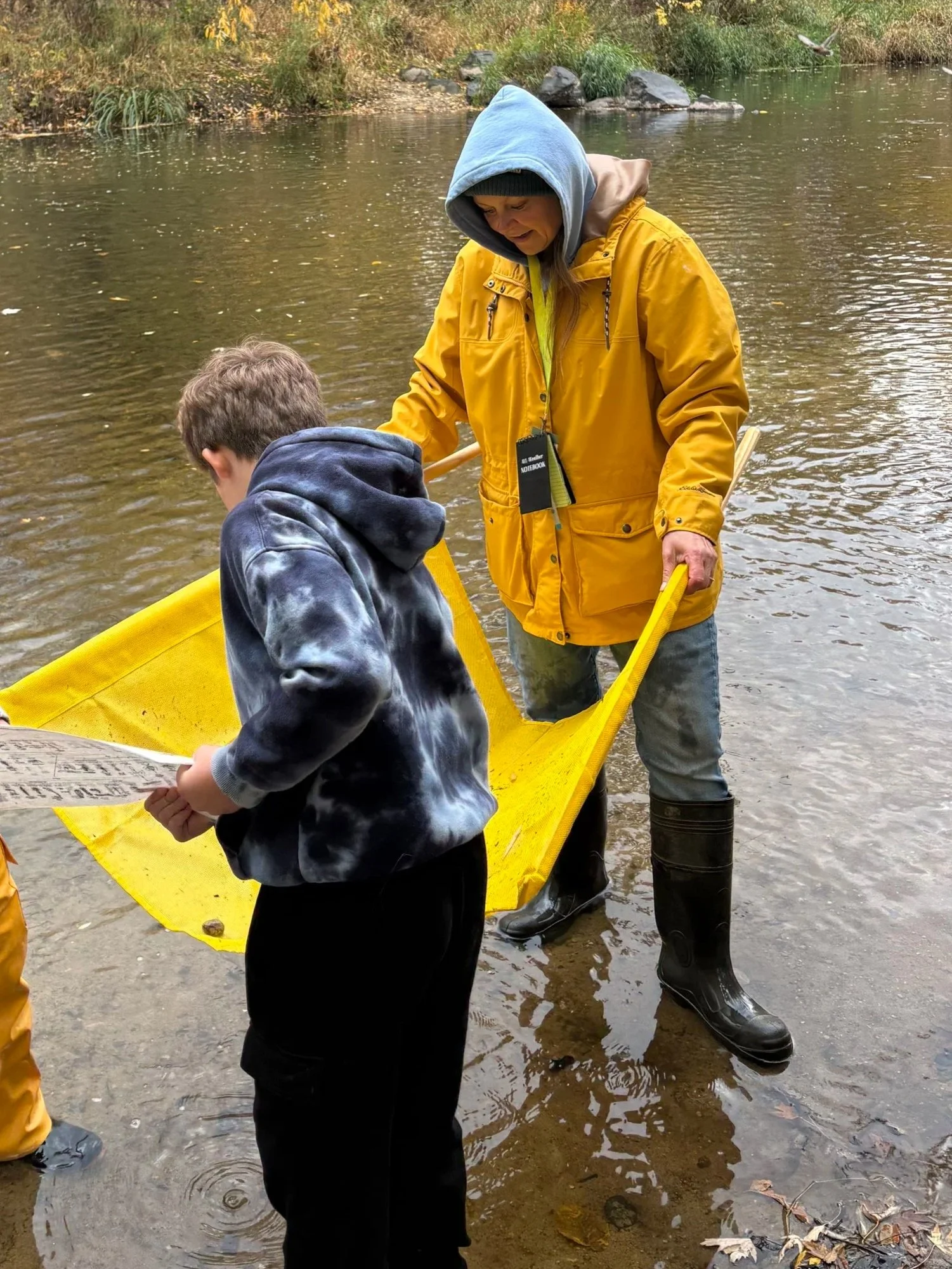
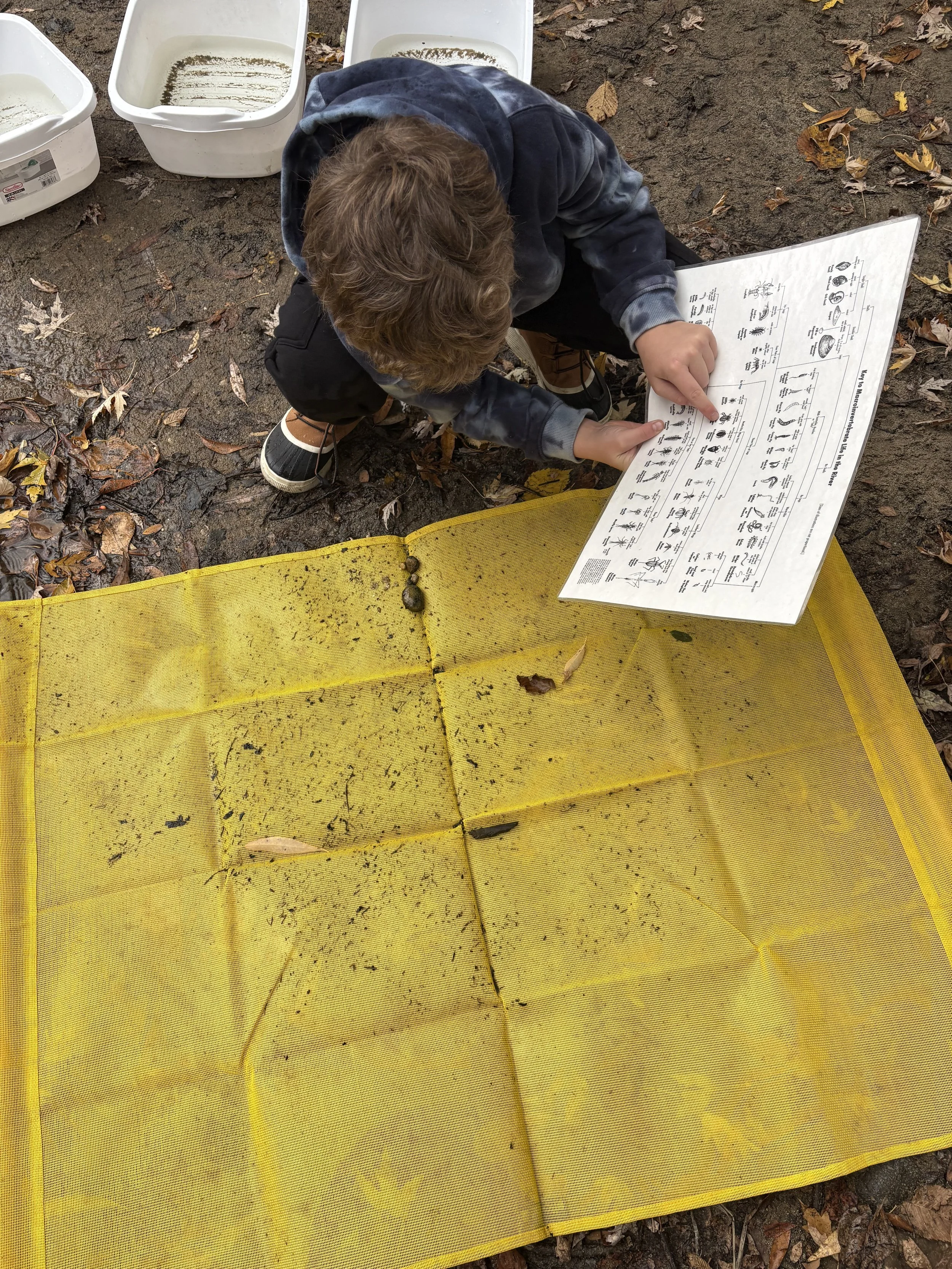
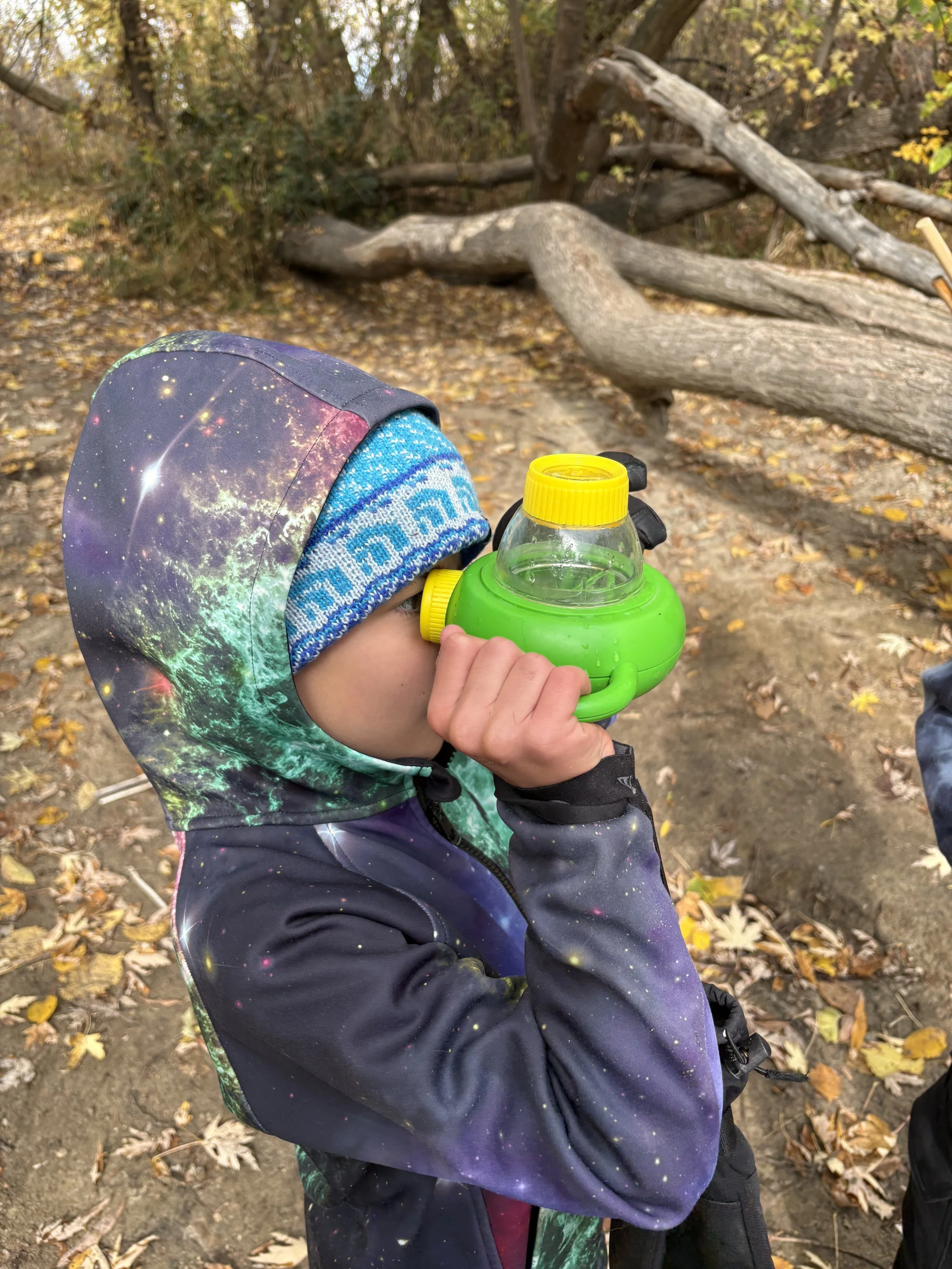
How do we determine the health of our water? The answer is waiting under the rocks. Using kick nets, white tubs, ice trays, and magnifying glasses, the children collected and identified local macroinvertebrates.
These tiny creatures are incredible biological indicators. Some species are highly tolerant of pollution, while others are incredibly sensitive. By mapping out exactly who is living in our riverbeds, our students could naturally deduce the health of the water and see if pollutants were present in greater concentrations.
Stratification, Salmon, and Seasonal Art
On day two, we brought the invisible mechanics of the river to life. Using a clear tub of room-temperature water, blue ice cubes, and red hot water, we demonstrated thermal stratification and mixing. The kids immediately noticed the distinct temperature layers, comparing them to the layers of a birthday cake, and watched in real-time as changing temperatures caused the waters to churn and mix.
We carried this scientific curiosity back to the riverbank during free play, using our testing kits at a different section of the river.
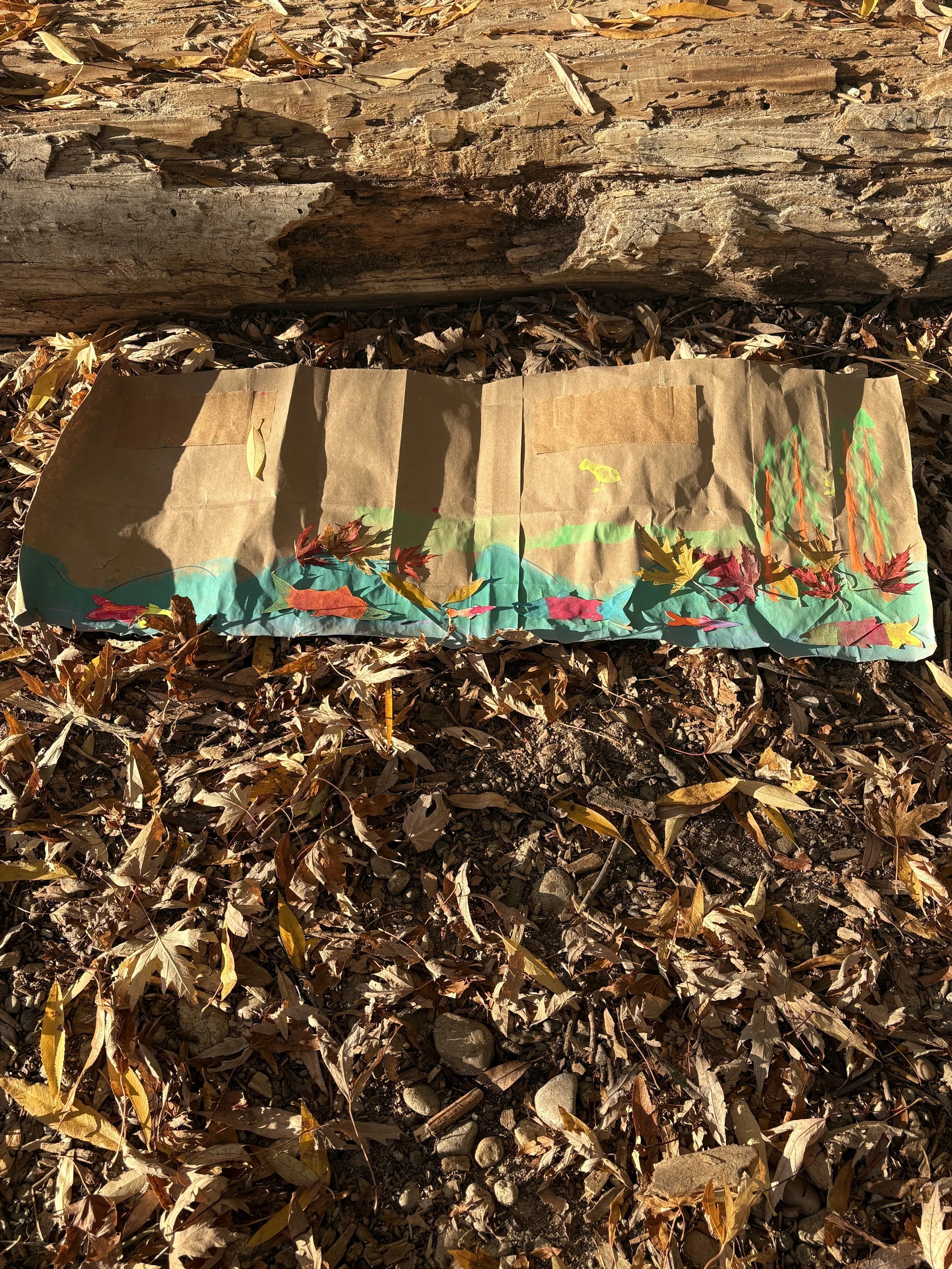
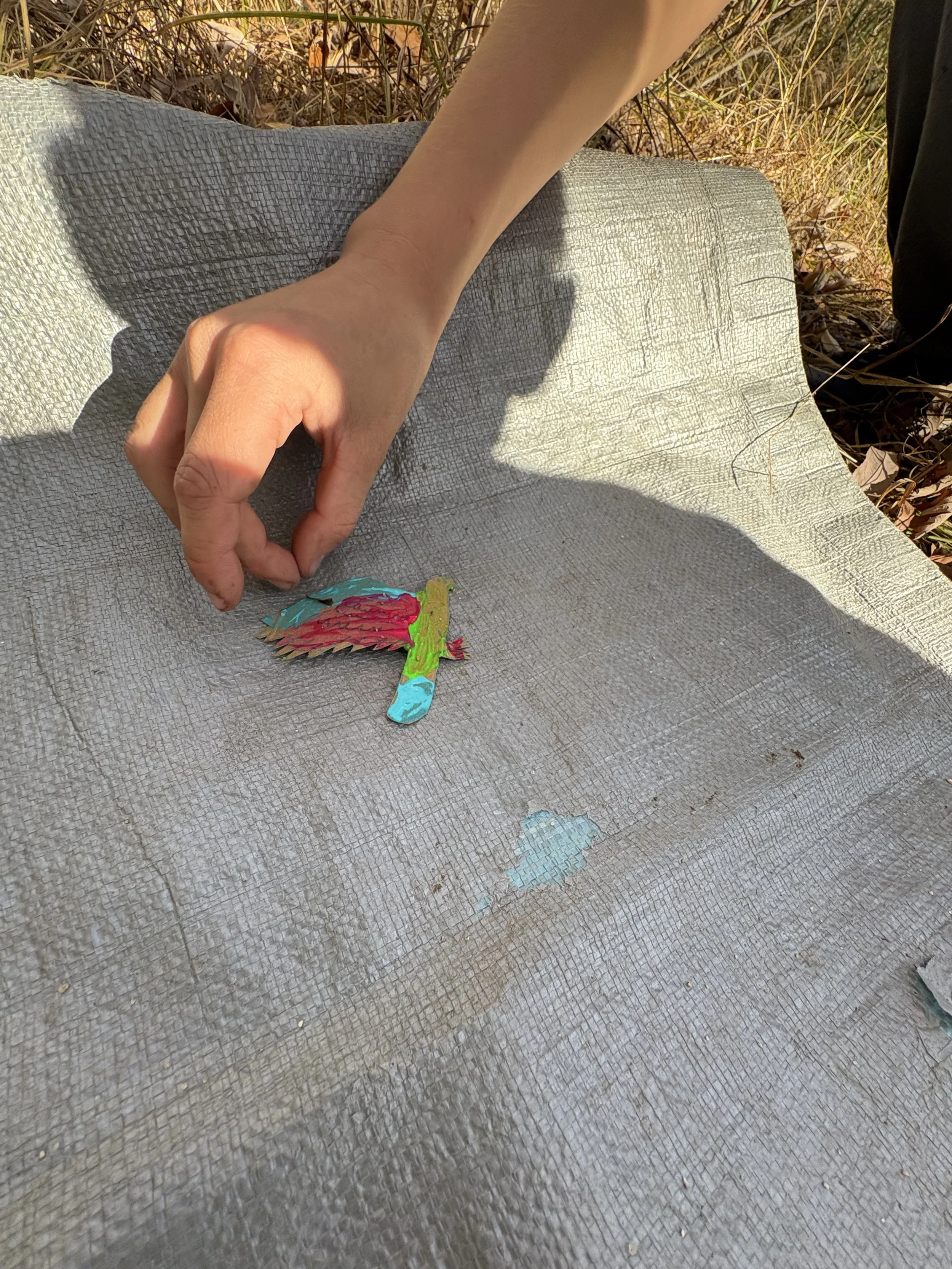
To cement these big concepts, we began a multi-week mixed-media art mural. We discussed the Kokanee salmon and their current seasonal journey in our local waters. The children painted Kokanee salmon and glued falling autumn leaves onto a massive river painting. We will continue adding to this project over the next few lessons, creating a complete seasonal snapshot of our ecosystem.
The Power of Place-Based Learning
When children work together outdoors, they aren't just memorizing definitions from a textbook. They are engaging in science through what they can physically see, experience, and debate. This information is deeply observed and felt, rather than shallowly retained through top-down inputs.
By balancing hands-on science, field skills, and art through discussion and problem-solving, the academic content is absorbed naturally. More importantly, the children feel a profound, lived connection to this place. When we teach this way, we aren't just teaching ecology—we are raising natural stewards of the land who will protect these waters as they grow and learn.